


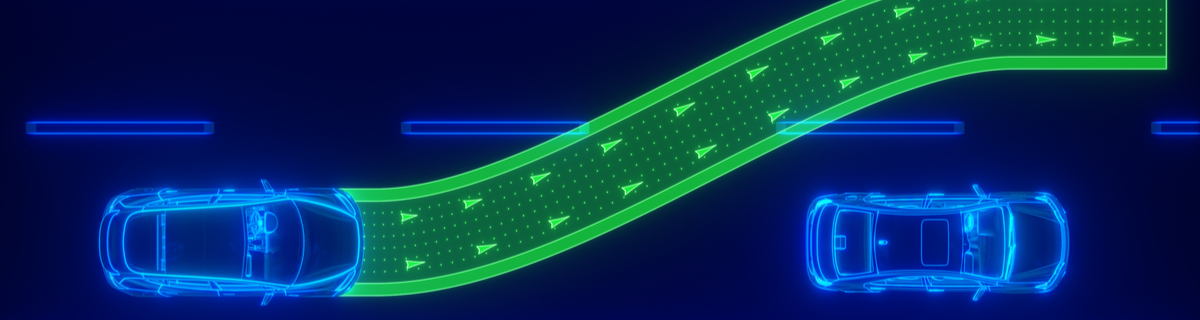
The IEEE Working Group for ADS Behavioral Safety published IEEE Std 2846-2022 in April 2022, along with two companion white papers. The Working Group has since completed two additional projects: IEEE Std 2846a-2025, which is an addendum to IEEE Std 2846-2022; and IEEE 3321-2024, which provides additional guidance for implementing IEEE Std 2846-2022.
Title: IEEE 2846a-2025 Standard for Assumptions in Safety-Related Models for Automated Driving Systems Amendment 1
Status: Pending publication
Scope: This standard applies to road vehicles. For a set of scenarios, a minimum set of assumptions regarding reasonably foreseeable behaviors of other road users are defined that shall be considered in the development of safety-related models for automated driving systems (ADS). This standard further defines a list of attributes common to contributed safety-related models and methods to help verify whether a safety-related model takes the minimum set of assumptions into consideration. An informative annex instantiates several examples of how the proposed minimum set of assumptions could be employed in ADS development. Sources of uncertainty, such as prediction or perception errors, are out of scope to this standard. This standard does not guarantee the safety of the overall system in all scenarios.

Title: IEEE 3321-2024 Recommended Practice for the Application of Assumptions on Reasonably Foreseeable Behavior of Other Road Users
Status: Published, available for purchase at: https://ieeexplore.ieee.org/document/10979694
Scope: IEEE Std 2846-2022 defines, for a set of initial scenarios, a minimum set of assumptions on the reasonably foreseeable behavior of other road users. This recommended practice provides guidelines for using the IEEE Std 2846-2022 standard during development and testing of Automated Driving Systems (ADS). Specifically, it covers:
(i) Approaches to identify the applicable IEEE 2846-2022 scenario(s), associated scenes and Operational Design Domains of interest, and safety-relevant agents;
(ii) Approaches for determining the applicability of assumptions for the given scenario(s)/scene(s) and safety-related agents (from (i) above) and for updating these assumptions across the temporal evolution of a scenario; and
(iii) Approaches to qualify and validate assumptions (i.e., toward identifying values/ranges) from IEEE Std 2846-2022 considering different kinds of performance targets of interest.
Compliance with this recommended practice does not guarantee the safety of the overall system.
 Title: IEEE Std 2846-2022 Assumptions for Models in Safety-Related Automated Vehicle Behavior
Status: Published, available for purchase at: https://ieeexplore.ieee.org/document/9761121
Scope: This standard applies to road vehicles. For a set of scenarios, the Normative portion defines a minimum set of assumptions regarding reasonably foreseeable behaviors of other road users that shall be considered in the development of safety-related models for automated driving systems (ADS).
The Informative portion of the standard further defines a list of attributes common to contributed safety-related models and methods to help verify whether a safety-related model considers the Normative minimum set of assumptions. Informative annexes instantiate several examples of how the proposed minimum set of assumptions could be employed in ADS development.
Sources of uncertainty, such as prediction or perception errors are out of scope to this standard.
This standard does not guarantee the safety of the overall system in all scenarios.
Need: Government and Industry alike are in need of an open, transparent and technology neutral standard that provides industry consensus guidance on identifying reasonable and foreseeable assumptions used by models, in specific scenarios useful for evaluating the performance of an Automated Driving System.
Related Product: Literature Review on Kinematic Properties of Road Users for Use on Safety-Related Models for Automated Driving Systems
This document presents a review of relevant literature (e.g., standards, regulations, and scientific publications) that investigated kinematic behavior of road users. This review is intended to serve as a key contribution to the Automated Driving Systems (ADS) research and industry communities, as well as to current standardization efforts, such as IEEE Std 2846, IEEE Standard for Assumptions in Safety-Related Models for Automated Driving Systems.
Related Product: Example Applications of IEEE Std 2846-2022 to Formal Safety-Related Models
While automated driving system (ADS)-operated vehicles hold the potential for safety improvement compared to human drivers, the recognition that transportation will continue to entail some level of risk has to be considered. Human drivers rely on extensive daily experience in their interactions with other agents on the road, which helps them craft assumptions about reasonably foreseeable behavior of other road users. Similarly, ADS-operated vehicles will also need to make assumptions. Such assumptions play a role within ADS safety-related models, which provide a representation of safety-relevant aspects of driving behavior pertaining to both ADS-operated vehicles and other road users. Furthermore, formal safety-related models provide transparency and certainty in ADS decision-making contexts as they can be formally verified. Therefore, this paper introduces how several safety-related models are making use of reasonably foreseeable assumptions to help with the decision making of an ADS-operated vehicle
Example Applications of IEEE Std 2846-2022 to Formal Safety-Related Models (PDF)